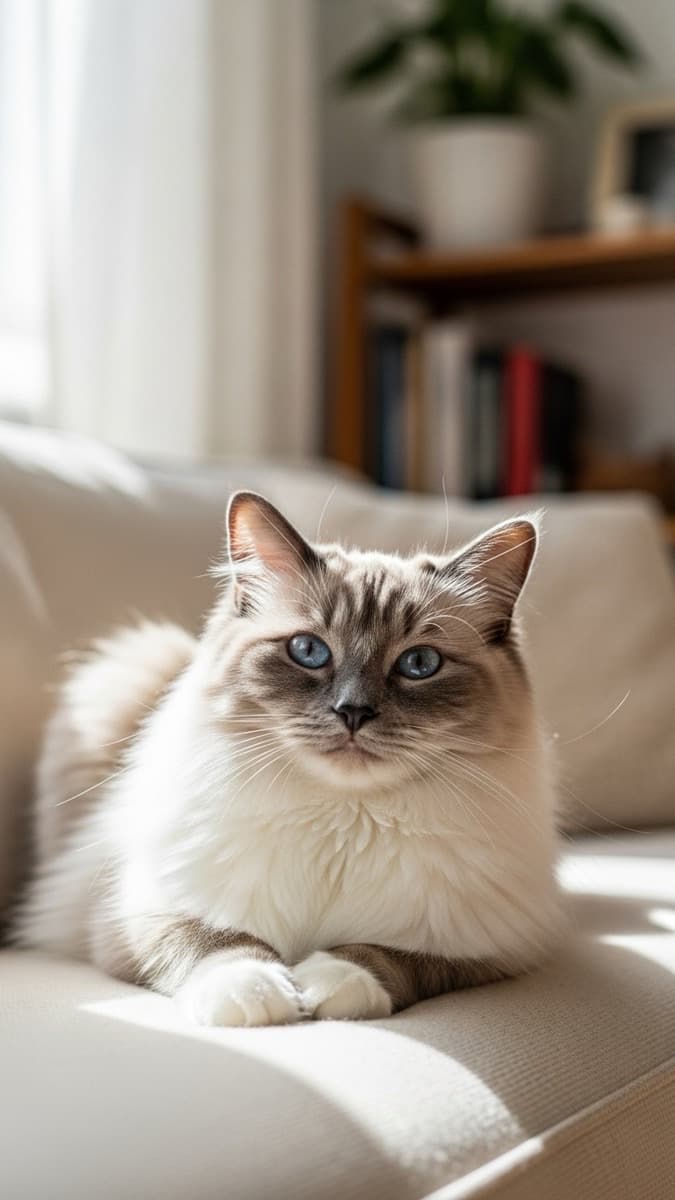
The Ragdoll is large — 4.5 to 9 kg — with a long coat and a calm, almost sedentary manner. That low energy is the central point: the cat gains weight easily. The breed also carries a genetic mutation linked to hypertrophic cardiomyopathy, documented in the Maine Coon as well. Controlling calories and providing nutritional support for the heart are the priorities when choosing the food.
Na análise atual da Revista Pet, a melhor ração para Ragdoll é N&D Prime (Farmina), com nota técnica 84.3/100 (⭐ Alto Padrão), calculada pela metodologia IDNM/IPFI Revista Pet sobre 55 rações para gatos analisadas em julho de 2026. Ver o ranking completo ↓
O que considerar na ração para Ragdoll
Three things weigh most in a Ragdoll's food: controlled calories, functional fiber and quality protein.
Weight. The Ragdoll has low energy and a "lap cat" temperament — he burns fewer calories per day than a more active cat, and the risk of excess weight is greater. Formulas with reduced caloric density, such as those designed for indoor cats, help hold the weight without cutting the volume in the bowl. Functional fiber — beet pulp or pea fiber, for example — prolongs satiety and helps intestinal transit, relevant in a long-haired breed.
Heart. The breed has a documented genetic mutation linked to hypertrophic cardiomyopathy (HCM), the most common heart disease in cats. Food does not treat the mutation — what it does is provide support: taurine at an adequate level and high-quality protein sustain cardiac function without requiring extra volume of food, which also helps with weight control.
Critérios avaliados pelos targets nutricionais Revista Pet (faixas de proteína, gordura, cálcio e densidade calórica por porte — ver metodologia).
Perfil e predisposições da raça
The Ragdoll carries a genetic predisposition to hypertrophic cardiomyopathy (HCM), the most common heart disease in cats. According to the Merck Veterinary Manual — Hypertrophic Cardiomyopathy in Dogs and Cats, mutations in the cardiac myosin-binding protein C gene (MYBPC3) have been identified in the Ragdoll and Maine Coon, among the breeds with the greatest documented genetic association with the disease. Food provides support — taurine at adequate levels and high-quality protein sustain cardiac function — alongside veterinary follow-up with periodic echocardiograms. Food alone neither prevents nor treats the genetic mutation.
The breed is also predisposed to excess weight, a direct result of the calm temperament and low exercise demand. According to the AAFCO Cat Food Nutrient Profiles, formulations aimed at indoor cats — with reduced caloric density and high fiber — are the nutritional response to that profile, alongside portion control as the central weight-management tool.
Rações recomendadas para Ragdoll
Ranking por nota técnica IDNM/IPFI entre 55 rações para gatos — sem curadoria manual de produto.
- 1
N&D Prime · Farmina
84.3/100 - 2
Biofresh Adultos Castrados · Hercosul
83.2/100 - 3
Pro Plan Sterilized · Purina
82.1/100 - 4
Fórmula Natural Fresh Meat · Adimax
81.9/100 - 5
N&D Ancestral Grain · Farmina
80.7/100
Perguntas frequentes sobre ração para Ragdoll
- Why does the Ragdoll gain weight more easily than other cats?
- It is a low-energy breed with a calm manner — the well-known 'lap cat' — which already means fewer calories burned per day. According to AAFCO's nutrient profiles for indoor cats, the answer is lower caloric density and high fiber in the food, plus good portion control.
- Does hypertrophic cardiomyopathy in the Ragdoll have anything to do with food?
- The cause is mostly genetic, not dietary. The Merck Veterinary Manual identified mutations in the MYBPC3 gene in the Ragdoll and Maine Coon, linked to the development of the disease. Food helps in another way: taurine at an adequate level and good-quality protein support the heart, but they do not change the genetic mutation.
- Does every Ragdoll have the genetic mutation linked to hypertrophic cardiomyopathy?
- No. The mutation is documented in the breed, but it is not in every individual. Even so, the Merck Veterinary Manual recognizes the predisposition of the breed as a whole — which justifies periodic echocardiograms, even with no symptoms at all.
- Does food prevent or cure hypertrophic cardiomyopathy in the Ragdoll?
- No. No food changes the genetic mutation that causes the disease. Nutrition's role is support — adequate taurine and good-quality protein — while diagnosis and management depend on veterinary follow-up with cardiac imaging.
Metodologia
The block of recommended foods on this page is ordered by Revista Pet's IDNM/IPFI technical methodology, which evaluates the nutritional density and ingredient purity of each product in the active dataset for the Ragdoll's large-size profile — with no manual curation or brand influence.
The score takes into account how well the food fits the breed's parameters: controlled caloric density and the presence of functional fiber are factors that weigh in the ranking, recalculated whenever the product dataset is updated.
O ranking desta página é uma projeção do motor de score IDNM/IPFI da Revista Pet sobre o dataset de gatos, sem curadoria manual de produto. Ver detalhes da metodologia →
Quer uma recomendação personalizada para o seu Ragdoll?