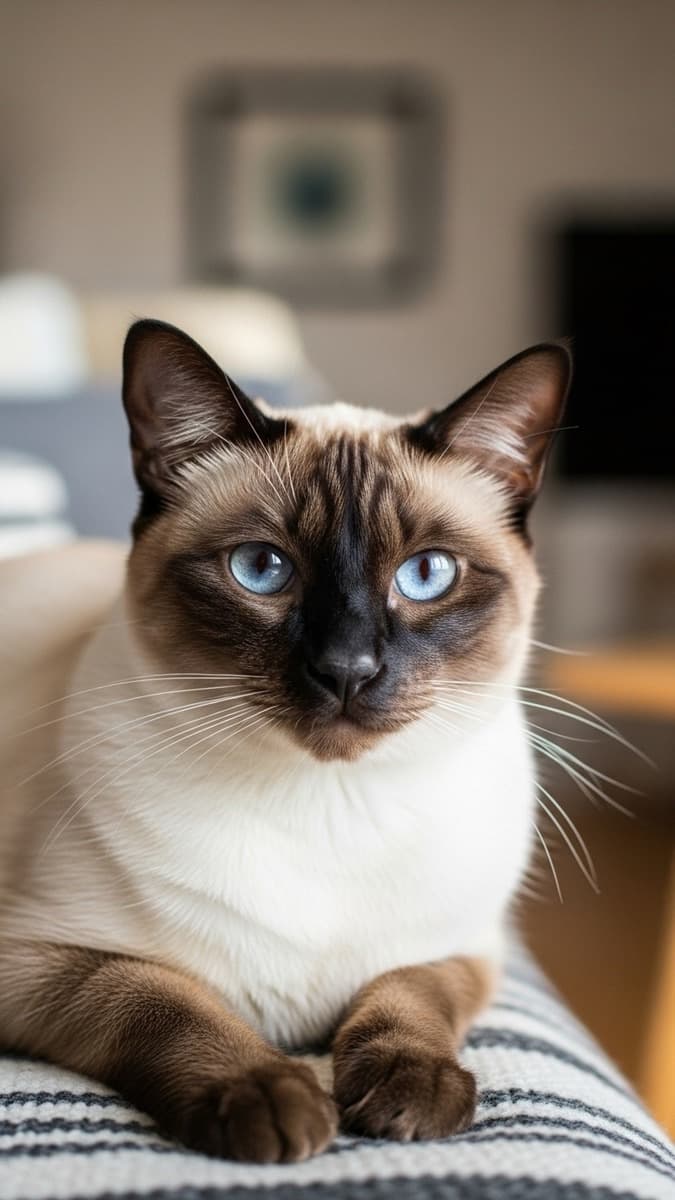
The Siamese is a medium-size cat, between 3 and 5 kg, with high energy and a fast metabolism — which is why he calls for more protein and more calories in his food than a more sedate cat. The breed also carries a familial tendency toward a liver problem (hepatic amyloidosis), documented in a 1999 scientific study. That reinforces the importance of good-quality, easily digestible protein.
Na análise atual da Revista Pet, a melhor ração para Siamês é Biofresh Adultos Castrados (Hercosul), com nota técnica 88.3/100 (🌟 Qualidade Superior), calculada pela metodologia IDNM/IPFI Revista Pet sobre 55 rações para gatos analisadas em julho de 2026. Ver o ranking completo ↓
O que considerar na ração para Siamês
Protein and energy. The Siamese is a live wire. His metabolism runs faster than that of a sedentary cat, and that calls for more animal protein and more calories per portion — AAFCO's nutrient profiles for adult cats confirm that greater demand. Since every cat is an obligate carnivore, that protein has to come mostly from meat, not from grain.
Weight and natural leanness. The Siamese tends to stay lean even when eating properly, because his fast metabolism burns energy quickly. A food with good calorie and protein density keeps him from losing weight for nothing — always calibrated by the veterinarian, looking at the cat's body, not a fixed ruler.
Liver. The breed has a familial tendency toward a problem called hepatic amyloidosis: a build-up of abnormal protein in the liver, which gradually interferes with the organ's function. Food neither causes nor prevents that — it is genetic. But in a day-to-day food, easily digestible protein and moderate fat help avoid overloading a liver that, in a Siamese, already carries that extra risk. In a diagnosed cat, nutritional management is always guided by the veterinarian.
Critérios avaliados pelos targets nutricionais Revista Pet (faixas de proteína, gordura, cálcio e densidade calórica por porte — ver metodologia).
Perfil e predisposições da raça
The Siamese carries two characteristics that change what to look for in the food.
The first is the liver. A study published in the journal Amyloid (Niewold et al., 1999), indexed in PubMed, found hereditary amyloidosis in families of Siamese cats, with the liver as the most affected organ — different from the Abyssinian, another breed with that problem, but one that affects the kidney. Not every Siamese develops the disease, but the documented risk already justifies choosing the food's protein carefully and prioritizing easily digestible ingredients.
The second is energy. According to the AAFCO Cat Food Nutrient Profiles, which define the maintenance nutritional parameters for adult cats, the Siamese has a more active metabolism than average — which calls for more protein and more calories per portion to sustain that expenditure, without letting the naturally lean cat lose weight.
Rações recomendadas para Siamês
Ranking por nota técnica IDNM/IPFI entre 55 rações para gatos — sem curadoria manual de produto.
- 1
Biofresh Adultos Castrados · Hercosul
88.3/100 - 2
N&D Prime · Farmina
87.4/100 - 3
Pro Plan Sterilized · Purina
85.1/100 - 4
Fórmula Natural Fresh Meat · Adimax
83.7/100 - 5
Equilíbrio Adultos Castrados · Total Alimentos
80.5/100
Perguntas frequentes sobre ração para Siamês
- Why does the Siamese need more protein and energy than other cats?
- The Siamese is a live wire. He eats and burns quickly, because his metabolism runs faster than that of a sedentary cat. That calls for more animal protein and more calories per portion — in line with what AAFCO's nutrient profiles recommend for adult cats at maintenance. Since every cat is an obligate carnivore, that extra protein has to come from meat, not from grain.
- What is this hepatic amyloidosis the Siamese tends to develop?
- It is a build-up of an abnormal protein (amyloid) inside the liver, which over time interferes with the organ's function. A 1999 study (Niewold et al., published in the journal Amyloid) found that problem in families of Siamese cats — different from the Abyssinian, another breed with amyloidosis, but one that affects the kidney, not the liver. The cause is genetic, linked to the structure of that protein in the breed.
- Does food cause or prevent the Siamese's hepatic amyloidosis?
- Neither. It is genetic — food neither causes nor avoids it. But in an already diagnosed cat, food helps the liver that still works to work with less effort: easily digestible protein, moderate fat and individual veterinary follow-up relieve the load on the organ.
- Will every Siamese develop that liver problem?
- No. It is a familial predisposition, not a sentence — not every Siamese has it. Even so, the documented risk (Niewold et al., 1999) is already reason enough to choose the food's protein carefully and keep an eye on liver health throughout life.
- Does a lean Siamese need to eat more than a cat of normal weight?
- The Siamese tends to stay lean even when eating properly — it is his fast metabolism burning energy quickly. That calls for a food with good calorie and protein density, matched to his expenditure. But fine-tuning the amount always goes through the veterinarian, assessing the cat's body condition score.
Metodologia
The block of recommended foods on this page is ordered by Revista Pet's IDNM/IPFI technical score, which evaluates the nutritional quality and ingredient purity of every product available for the Siamese's medium-size profile. The order is calculated automatically and updated whenever the catalog changes — no brand pays to appear, and there is no manual product selection.
O ranking desta página é uma projeção do motor de score IDNM/IPFI da Revista Pet sobre o dataset de gatos, sem curadoria manual de produto. Ver detalhes da metodologia →
Quer uma recomendação personalizada para o seu Siamês?